TreatmentsPRP
PRP therapy.
Platelet-rich plasma: a concentrate of your own blood's growth factors, returned to the skin or scalp to prompt repair. For skin quality, acne scarring and stretch marks, and for thinning hair. Nothing in it but you.
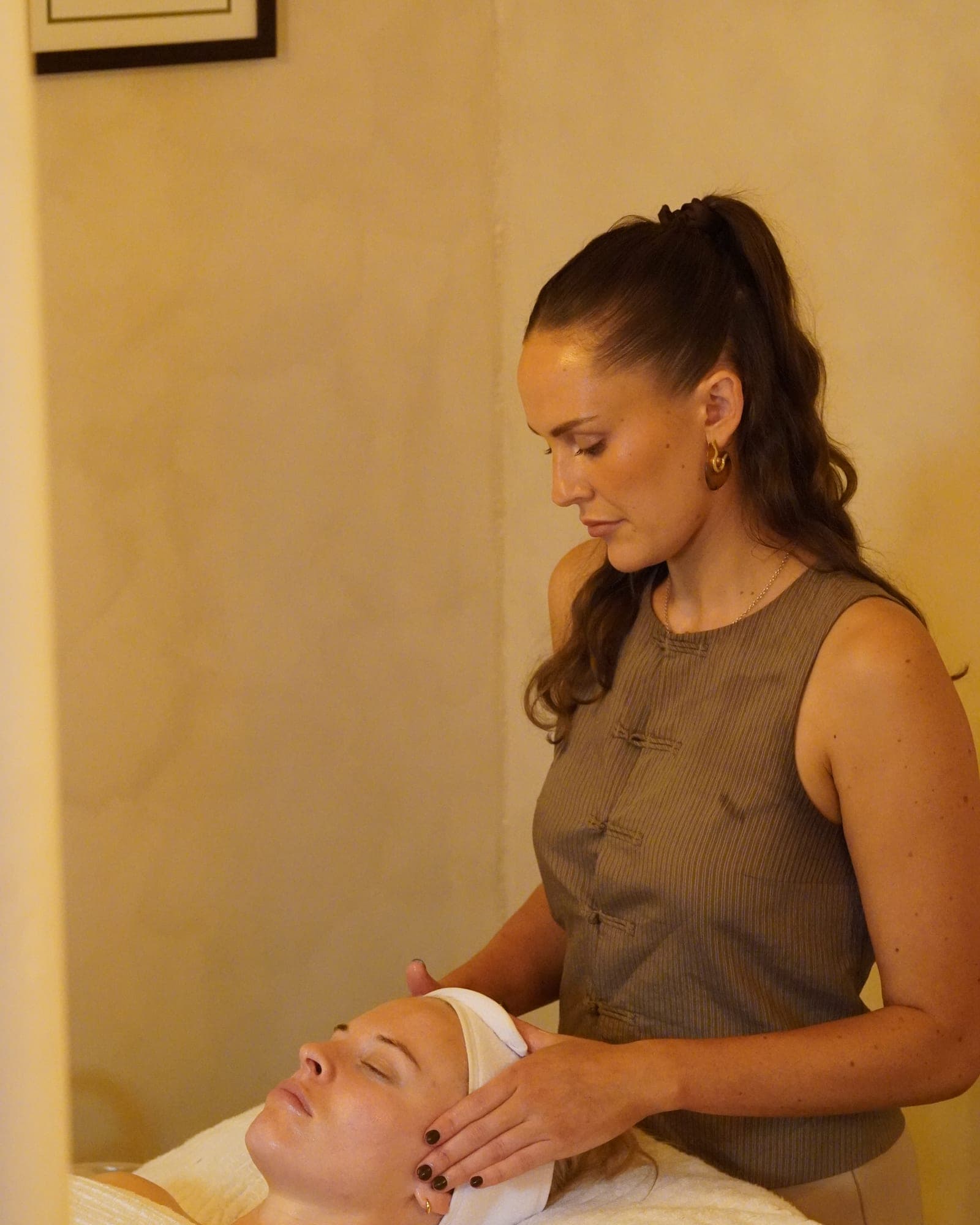
How does PRP work?
A small sample of your blood, taken like an ordinary blood test, is spun in a centrifuge to separate the platelets and plasma from the red cells. Platelets carry the growth factors the body uses to heal, so the concentrate that is left is a repair signal made entirely from you. For the skin it is carried in by microneedling; for hair it is injected into the scalp. Either way, the tissue responds with new collagen, elastin and blood supply.
What can it help with?
On the face: fine lines, dull or uneven skin, rough texture, acne scarring and stretch marks. On the scalp: thinning hair and a receding hairline, by feeding the follicles that are still there. Because there is nothing in it but your own blood, the risks are minimal and it suits almost everyone. For hair, Gina will tell you at consultation whether PRP is likely to help, since it needs living follicles to work on.
What should I expect?
The blood draw first, then numbing cream while your sample is spun. The treatment itself is comfortable. Afterwards the skin is pink, and injection points may show, for up to a day. Results come as the tissue repairs: visible from four to eight weeks and still improving for up to nine months. Skin needs a course of three and hair a course of six, a month apart, then a session every six months or so to maintain.
Questions
The things people ask before booking, answered honestly.
Something else? Call Gina on 07709 266584
- It is one of the safest treatments in the clinic, because it is made from your own blood: there is nothing to react to and nothing foreign in it. The risks are the small ones of any injection, such as a little bruising. Gina takes a medical history first all the same.
- The blood draw feels like a blood test. Numbing cream is applied before the treatment, so the microneedling or scalp injections are mild: a scratching or pressure sensation rather than pain.
- For skin concerns such as ageing, acne scarring or stretch marks, three treatments four weeks apart. For hair, six treatments four weeks apart. After that, a single session every six months keeps the result.
- It can thicken hair and slow further loss where follicles are still present, which is why it works best on early thinning and a receding hairline rather than on areas that have been bald for years. Gina will be honest at your consultation about what it is likely to do for you.
Book PRP
Book a session or a course online, or call or email to ask whether PRP is right for your skin or your hair. About an hour, at 8 Devonshire Street in the centre of Penrith.